
Fixed Prosthodontics Course: Complete Guide to Crowns, Bridges & Partial Coverage
Course Overview The Fixed Prosthodontics Course: Complete Guide to Crowns, Bridges & Partial Coverage provides dental students, interns, and practicing dentists with a thorough clinical framework for indirect restorations. From fundamental terminology and full-coverage crowns to contemporary partial coverage restorations …
Overview
Course Overview
The Fixed Prosthodontics Course: Complete Guide to Crowns, Bridges & Partial Coverage provides dental students, interns, and practicing dentists with a thorough clinical framework for indirect restorations. From fundamental terminology and full-coverage crowns to contemporary partial coverage restorations (inlays, onlays, overlays, and endocrowns) and complex fixed partial denture (FPD) mechanics, this fixed prosthodontics course bridges biomechanical theory with daily restorative practice. Explore our full library of online dental courses to further advance your clinical skills.
What You Will Learn in This Fixed Prosthodontics Course
Crown Indications & Classifications
Understand when to crown a tooth, full-coverage crown materials, biological margins, and mechanical retention forms.
Modern Partial Coverage Restorations
Master contemporary biomimetic concepts including inlays, onlays, overlays, 3/4 crowns, and endocrown restorations for endodontically treated teeth.
Dental Bridges (FPD) Architecture
Learn abutment evaluation, pontic designs (sanitary, ridge lap, ovate), and Ante’s Law following accepted ADA prosthodontic guidelines.
Connectors & Pier Abutments
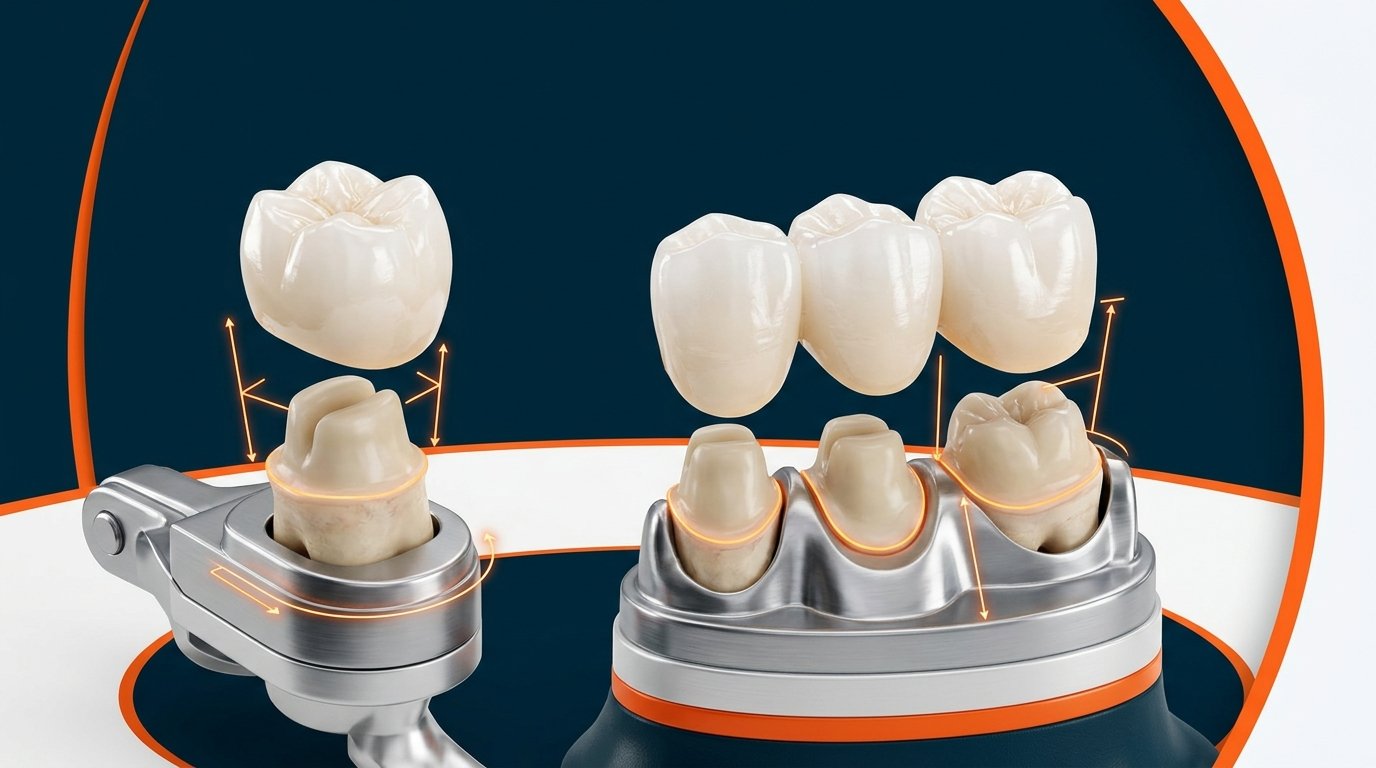
Design rigid vs. non-rigid connectors, manage intermediate pier abutments with stress breakers, and avoid common structural failures.
Mastering Biomechanics in This Fixed Prosthodontics Course
Successful indirect dentistry requires harmonizing biology, mechanics, and esthetics. This comprehensive fixed prosthodontics course equips clinicians with the diagnostic logic and structural principles needed to plan predictable single units and multi-unit fixed partial dentures.
Key Clinical Competencies You Will Gain:
- ✅ Accurately diagnose indications for full-coverage versus partial-coverage tooth preparations
- ✅ Differentiate between inlays, onlays, overlays, and endocrowns to preserve healthy tooth structure
- ✅ Identify all essential FPD components: retainers, abutments, pontics, and connectors
- ✅ Solve pier abutment fulcrum challenges using customized non-rigid connector systems
- ✅ Categorize fixed partial dentures (cantilever, resin-bonded, conventional, hybrid) with confidence
- ✅ Prepare with clarity for university preclinical exams, clinical vivas, and board licensing tests
Structured into 5 logical sections and 18 bite-sized lessons, this fixed prosthodontics course guarantees you establish a solid foundation for clinical prosthodontic success.
🦷 Elevate your crown and bridge expertise today!
Frequently Asked Questions
Who is this fixed prosthodontics course designed for?
This course is tailored for undergraduate dental students, interns preparing for licensure exams, and general dental practitioners wishing to refresh their core knowledge on crowns, bridges, and partial coverage indirect restorations.
Does this course cover partial coverage restorations like inlays, onlays, and endocrowns?
Yes. Section 3 includes in-depth lessons covering indications, geometry, and classifications for full-coverage crowns as well as conservative partial coverage options such as inlays, onlays, overlays, and endocrowns.
Do I get lifetime access to all course lectures and materials?
Yes. Enrolling gives you unrestricted 24/7 lifetime access on mobile, tablet, and desktop devices.
Will I receive an official certificate upon completion?
Yes. An official certificate of completion from Dental School Online is awarded automatically once you complete all video lessons and assessments.
Curriculum
- 5 Sections
- 18 Lessons
- Lifetime
- SECTION 1: Introduction to Fixed ProsthodonticsAn essential overview of the fixed prosthodontics specialty, outlining clinical objectives, biological parameters, and the fundamental principles governing crown and bridge restorations.3
- SECTION 2: Terminology & DefinitionsComprehensive coverage of essential prosthodontic terminology, distinguishing between crowns, bridges, abutments, retainers, and various indirect restoration types for clinical accuracy.4
- SECTION 3: Indications & Classification of CrownsIn-depth exploration of clinical indications and classifications for full-coverage crowns, alongside contemporary partial coverage restorations including inlays, onlays, overlays, and endocrowns.6
- 3.1Indications of Dental Crowns26 Minutes
- 3.2Crowns Classifications (Full Coverage) – Part 128 Minutes
- 3.3Crowns Classifications (Full Coverage) – Part 235 Minutes
- 3.4Crowns Classifications (Partial Coverage) – Part 130 Minutes
- 3.5Crowns Classifications (Partial Coverage) – Part 233 Minutes
- 3.6Crowns Classifications (Partial Coverage) – Part 329 Minutes
- SECTION 4: Dental Bridges – Foundations & ComponentsDetailed breakdown of fixed partial denture components, abutment selection, pontic biomechanics, and the clinical management of rigid versus non-rigid connectors with pier abutments.3
- SECTION 5: Classification of Fixed Partial DenturesSystematic classification of dental bridges, examining design principles, span mechanics, cantilever configurations, and clinical indications for various clinical scenarios.2
Instructor
Requirements
- Basic knowledge of dental anatomy, occlusal principles, and tooth morphology.
- Familiarity with rotary cutting instruments and basic restorative materials.
Features
- Complete full-coverage and partial-coverage crown classification guides
- In-depth bridge connector design and pier abutment mechanics
- Conservative inlays, onlays, overlays, and endocrown protocols
- Verifiable Certificate of Completion
Target audiences
- Dental Students (Preclinical phantom lab and clinical years).
- Dental Interns preparing for prosthodontic licensing exams and viva assessments.
- General Dental Practitioners reviewing indirect restorative protocols.
You May Like
Oral and Maxillofacial Surgery Course: Infection Control Protocols & Clinical Exam Prep
Master surgical infection control cycles, autoclave protocols, bloodborne pathogen management, and high-yield practical exam preparation in oral surgery.
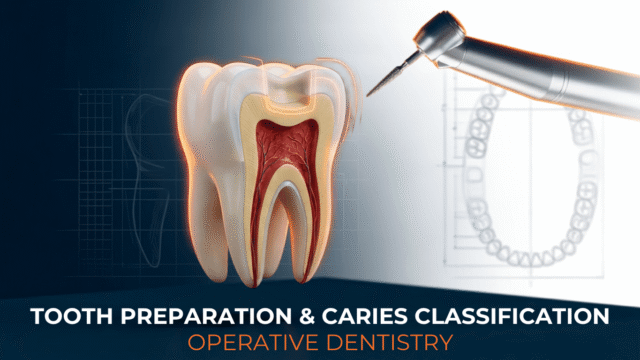
Operative Dentistry Course: The Complete Guide to Tooth Preparation & Caries Classification
Master the biological foundations of tooth preparation, caries histopathology, and the complete G.V. Black classification system with clear clinical guidelines.
Dental Biomaterials Course: Atomic Principles, Impression Systems & Ceramics
Master the science of dental biomaterials from atomic bonding and crystalline structures to elastomeric impressions, composites, and dental ceramics.
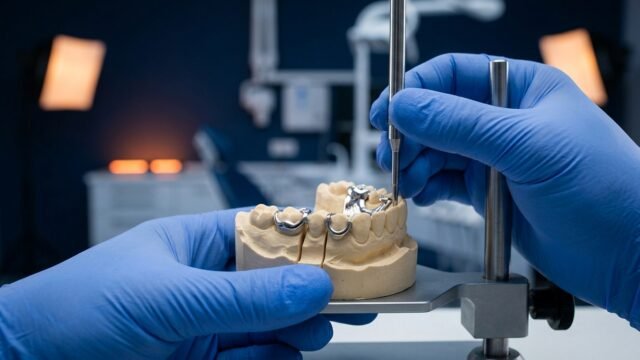
Removable Partial Denture Course: Kennedy Classification, Framework Design & Components
Master removable partial denture foundations, Kennedy classification, Applegate's rules, and structural component biomechanics for predictable prosthodontic outcomes.
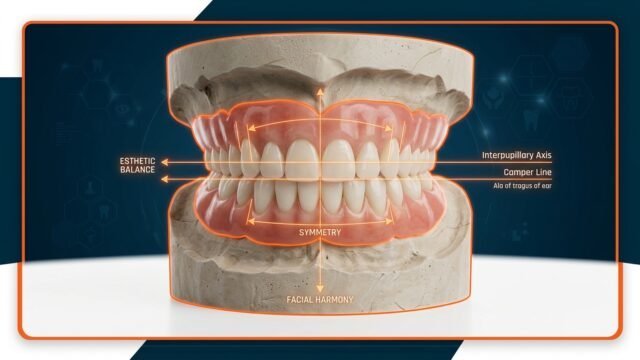
Complete Denture Course: Foundations, Fabrication Workflow & Clinical Landmarks
Master complete denture prosthodontics step-by-step. Learn structural components, intraoral/extraoral landmarks, fabrication workflow, and facial reference lines.
Course Features
- Lectures 18
- Quiz 0
- Duration Lifetime access
- Skill level All levels
- Language English, Arabic
- Students 1
- Certificate No
- Assessments Yes